Do You Need a Trust if You Have a Will?
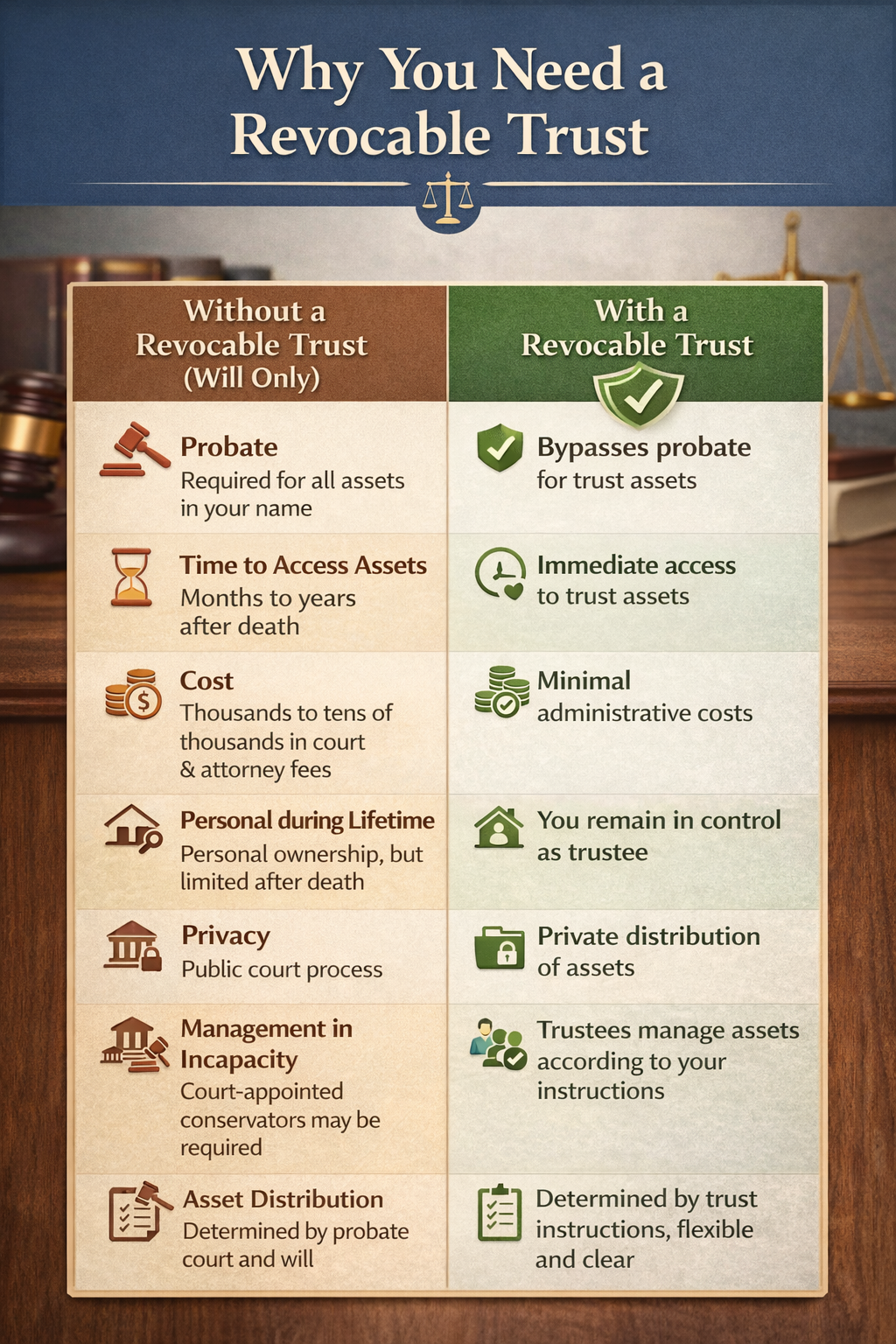
Comparison infographic showing benefits of a revocable trust versus a will for estate planning and probate.
Many people assume that having a will is enough to handle their estate. While a will is important, it does not avoid one of the biggest headaches in estate planning: probate. Anything you own in your own name, including your house, bank accounts, and investment accounts, must go through probate, even if your will specifies your heirs. Probate can take months or even years and can cost thousands or tens of thousands in court and attorney fees.
Top Reasons to Consider a Revocable Trust
A properly drafted revocable trust holds your property for you, allowing it to bypass probate entirely. My simple rule of thumb is that if you own land, you should have a revocable trust. This saves time and money for your heirs and keeps your affairs private.
How a Revocable Trust Works: Manage Your Assets While Living
Some people worry that putting property in a revocable trust means they cannot sell or manage it as usual. That is not true. As the trustee of your own revocable trust, you can buy, sell, or mortgage assets just as if you still owned them personally. You remain in control during your lifetime, but the trust becomes the legal owner for estate purposes.
Step-by-Step Example: How a Revocable Trust Protects Your Family
Mom and Dad want their estate divided 50/50 between their two adult children, a son and a daughter.
They set up a revocable trust. Mom and Dad are the initial trustees and initial beneficiaries, with their son and daughter designated as contingent trustees and contingent beneficiaries who will step in after both parents pass.
They quitclaim their house and other real property into the revocable trust.
They create pour-over wills, which catch any assets they later acquire that were not added to the trust, ensuring everything eventually flows into it.
They set up Power of Attorney (POA) and Health Care Directives (HCD) to plan for incapacity.
Dad passes away. Mom remains alive but later develops dementia.
Son and daughter become active trustees of the revocable trust and manage it responsibly.
Mom remains a beneficiary of the revocable trust. The children must use trust assets for her care and best interest until she passes.
Only after both Mom and Dad have passed can the son and daughter use the trust assets for their own benefit.
In other words, you are a trustee until you cannot perform the role, but you remain a beneficiary for life.
Avoid Probate and Protect Your Assets
Without a revocable trust, Mom and Dad’s estate would have gone through probate after each death, delaying access to assets and creating unnecessary costs and stress for their children. A revocable trust ensures:
Avoiding lengthy probate processes
Continuity of management if someone becomes incapacitated
Clear instructions for heirs and trustees
Privacy for your estate and family affairs
Key Takeaways for Estate Planning
If you own land or other significant assets, a revocable trust is not just a legal tool. It is a practical solution that saves time, money, and stress for your loved ones while giving you peace of mind that your wishes will be followed.
For more practical estate planning advice, follow me on my social media channels or send a message through my law firm website. I can help you determine the best structure for your situation and make sure your family is protected.