How Long Does a Straightforward Estate Plan Take?
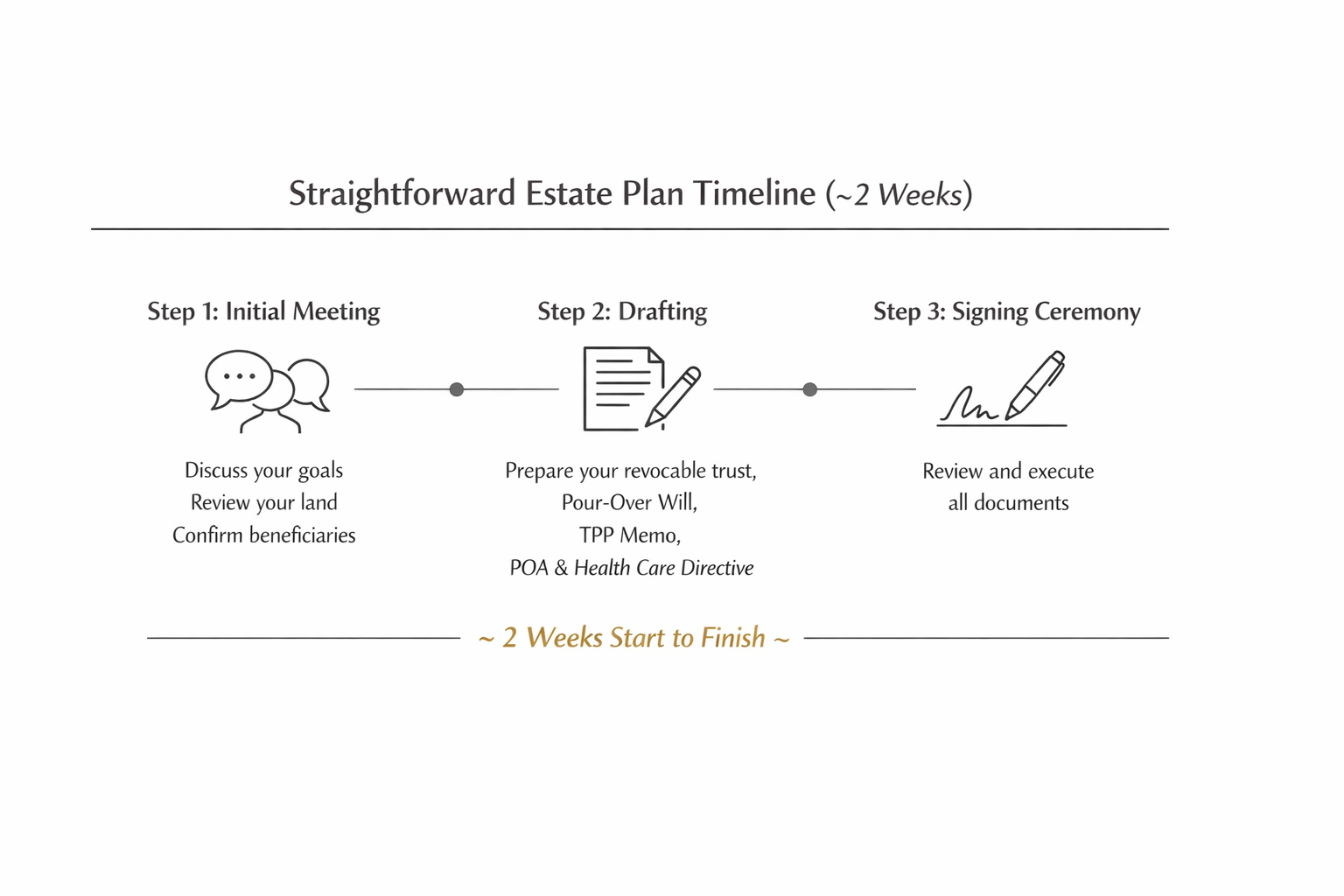
Minimal horizontal timeline infographic showing a straightforward estate plan: meeting, drafting, and signing—completed in about two weeks.
Estate planning doesn’t have to be complicated, expensive, or take forever. Forget the myth that attorneys charge $3,000 an hour and spend six months on a single estate—that’s simply not true.
By “straightforward estate plan,” I mean a plan for clients who:
Own land but don’t have complicated business structures, farms, or multiple LLCs.
Want their assets to pass in a simple, predictable way—usually kids splitting equally.
Don’t need probate work or anything beyond the basic protections.
A straightforward estate plan typically includes:
A revocable trust (with land being the only asset in the trust)
A quitclaim deed (that transfers the land to the trust)
A pour-over will
A temporary personal property memorandum (TPP memo) (this is where things like jewelry and firearms are allocated specifically - if you wish to use it at all)
A power of attorney (POA)
A health care directive (HCD)
Related legal documents (i.e., my retainer agreement, notes on how to use the above-stated documents, etc.)
How it works:
Initial meeting: We talk through your goals, your land, and your beneficiaries.
Drafting: I prepare the documents based on that meeting.
Signing ceremony: We review and sign everything.
From start to finish, a straightforward estate plan usually takes about two weeks, depending on schedules.
This approach works best for clients who are uncomplicated, know what they want, and just want to get the job done efficiently and correctly.
Want to learn more or get started?
Check out my social media channels—most of your questions can probably be answered before we even meet. Then, when you’re ready, visit my firm website to have a straightforward estate plan prepared for you without unnecessary delays or confusion.