Pesticide Drift Can Destroy Your Crops.
How to Recover What’s Rightfully Yours.
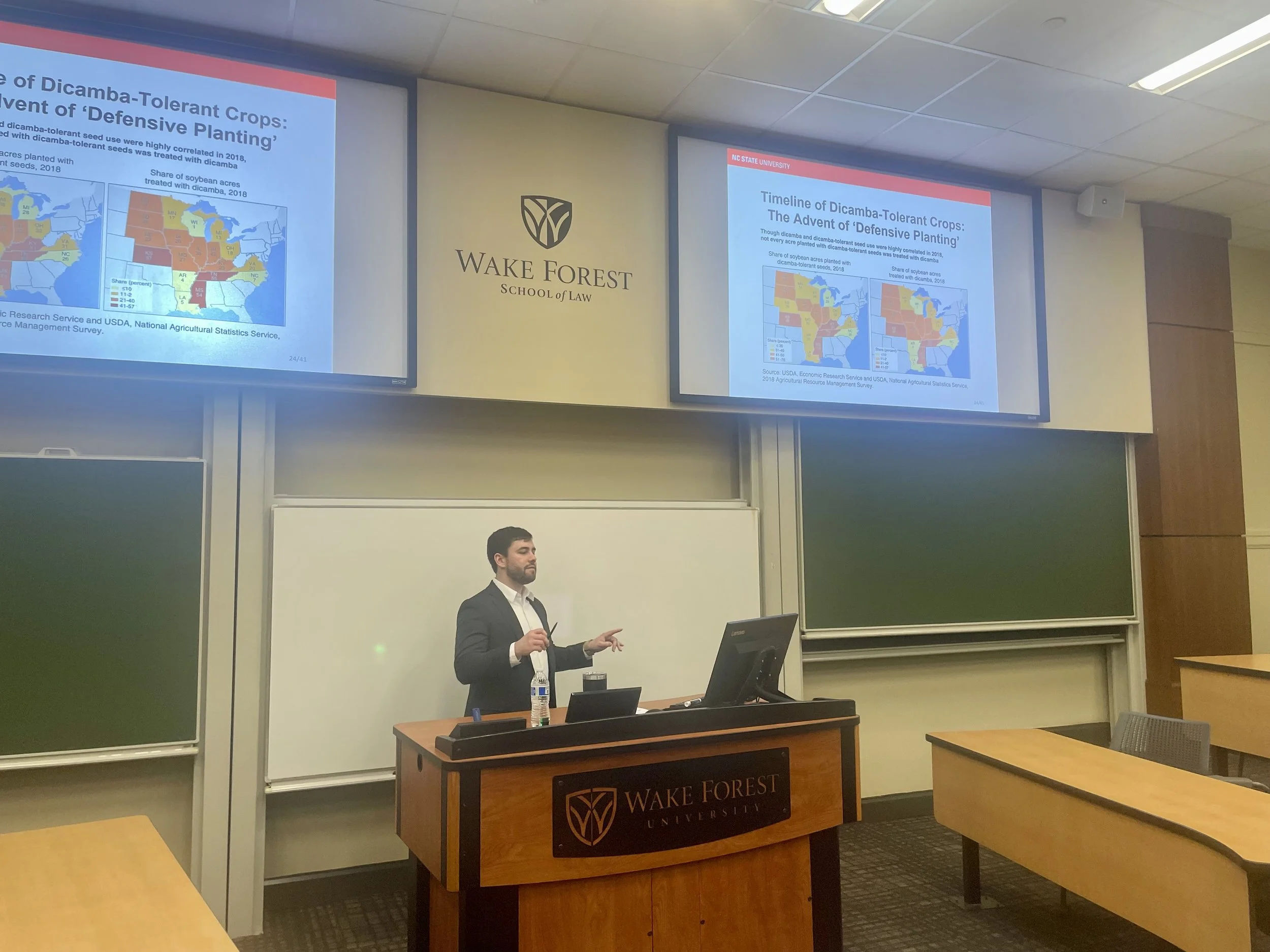
Helping farmers recover from pesticide drift — trusted by clients and fellow attorneys nationwide
Why Pesticide Drift Cases Are Complex

Pesticide drift cases are different from most legal claims because they involve both science and law. Large row crops and specialty farms like orchards or vineyards are affected in different ways, and conventional, GM, and organic crops all require a different approach to calculating losses. Farmers cannot always rely on insurance or government programs to cover drift damage, which means legal recovery is often the only option.
Proving who is responsible usually requires scientific evidence, including analysis of how chemicals were applied, weather conditions, and testing of affected fields. Different state and federal rules, along with agricultural regulations, create a complex legal environment that can make outcomes unpredictable. Each case requires careful evaluation to determine the best path to recovery.
Because of these challenges, farmers and even other attorneys often seek guidance from someone with specialized experience in drift cases. With the right expertise, it is possible to accurately measure damages, recover lost income, and protect both the farm and future livelihood.
My Experience & Expertise
I am one of the few attorneys in the nation with deep experience handling pesticide drift cases. I have consulted on major cases nationwide and worked with other law firms seeking guidance on complex claims involving conventional, GM, and organic crops. My work combines legal strategy with scientific and agricultural knowledge to help farmers and clients pursue the full value of their losses.
I have been interviewed by the New York Times and invited to speak at prominent law schools on the topic of pesticide drift, reflecting recognition of my expertise by both media and the legal community. My research and publications are widely referenced, providing practical insights into the nuances of damage calculations, including how crop type, certification, and market value affect potential recovery.
Farmers and other attorneys alike rely on my guidance to navigate these challenging claims. Whether advising on litigation strategy, assessing losses, or coordinating with expert witnesses, my goal is to help clients recover what they are owed while reducing uncertainty and risk.
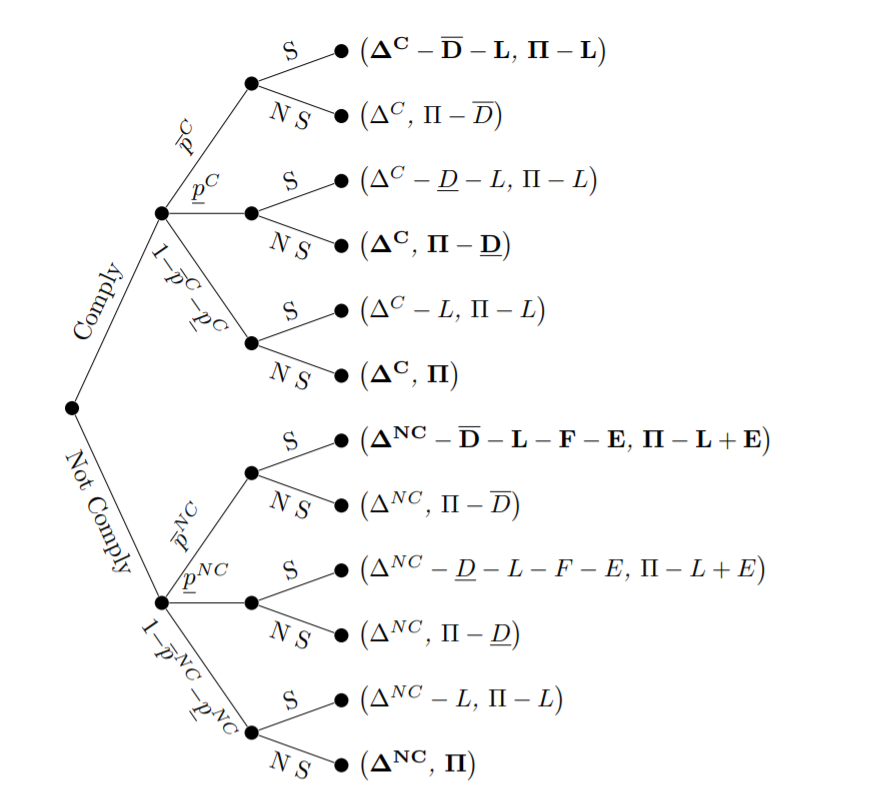
One of the models from one my research papers on dicamba drift.
How I Help Farmers
I help farmers understand their rights and guide them through the process of recovering damages when pesticide drift affects their crops. Different types of crops—conventional, genetically modified, and organic—each have their own challenges when it comes to proving loss. Specialty farms like orchards and vineyards often face unique damages that need careful attention. I work with agricultural and scientific experts to make sure every claim is supported by strong evidence.
I assist with documenting losses, communicating with neighboring farms or applicators, and negotiating with insurance companies when necessary. For cases involving large damages, I have contacts with high-powered litigation firms that can handle complex claims, ensuring farmers have access to the resources they need to pursue full recovery. My goal is to help farmers get fair compensation while letting them focus on running their farms.
Whether you grow row crops or manage a high-value orchard or vineyard, I provide hands-on guidance to protect your livelihood and the long-term investment you’ve made in your land.

How I Help Law Firms That Take Drift Cases
I assist law firms handling pesticide drift cases by providing specialized knowledge of agricultural practices and crop damage. I understand how conventional, genetically modified, and organic crops are affected, as well as the unique issues faced by specialty farms like orchards and vineyards. This expertise allows me to help attorneys accurately evaluate claims and develop effective case strategies.
I can serve as a consultant on cases you bring in, working with your team to review evidence, coordinate with agricultural and scientific experts, and ensure that all aspects of crop damage are properly documented. My goal is to provide insight that strengthens your case and helps you pursue full recovery for your clients.
By partnering with law firms, I help bridge the gap between complex agricultural issues and legal strategy, giving attorneys confidence in handling these challenging cases.

Publications & Recognition
I have written extensively on pesticide drift, with articles in leading agricultural law journals that provide practical guidance for both farmers and attorneys. My work is used by law schools and legal professionals seeking insight into complex drift cases.
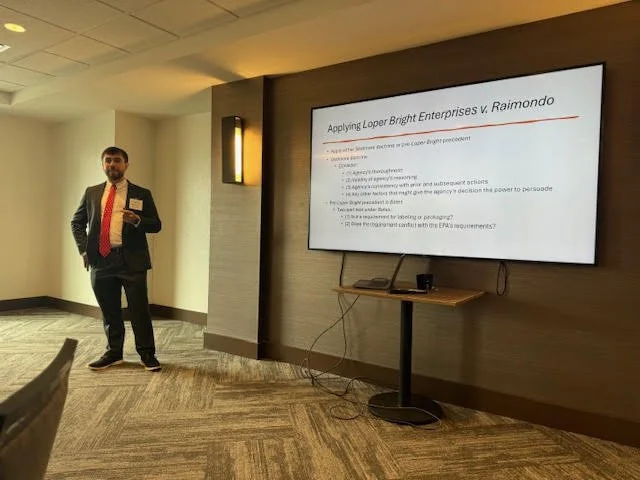
I have also shared my expertise through speaking engagements at prominent law schools and interviews with major media outlets, including the New York Times. These opportunities allow me to translate complex legal and agricultural issues into actionable guidance for clients and other attorneys.
Through these publications and presentations, I aim to make the science and law behind pesticide drift more understandable and accessible, helping clients protect their crops and attorneys build stronger cases.
How to Recover Drift Damages Under Different Legal Theories
Economics Behind Dicamba Drift
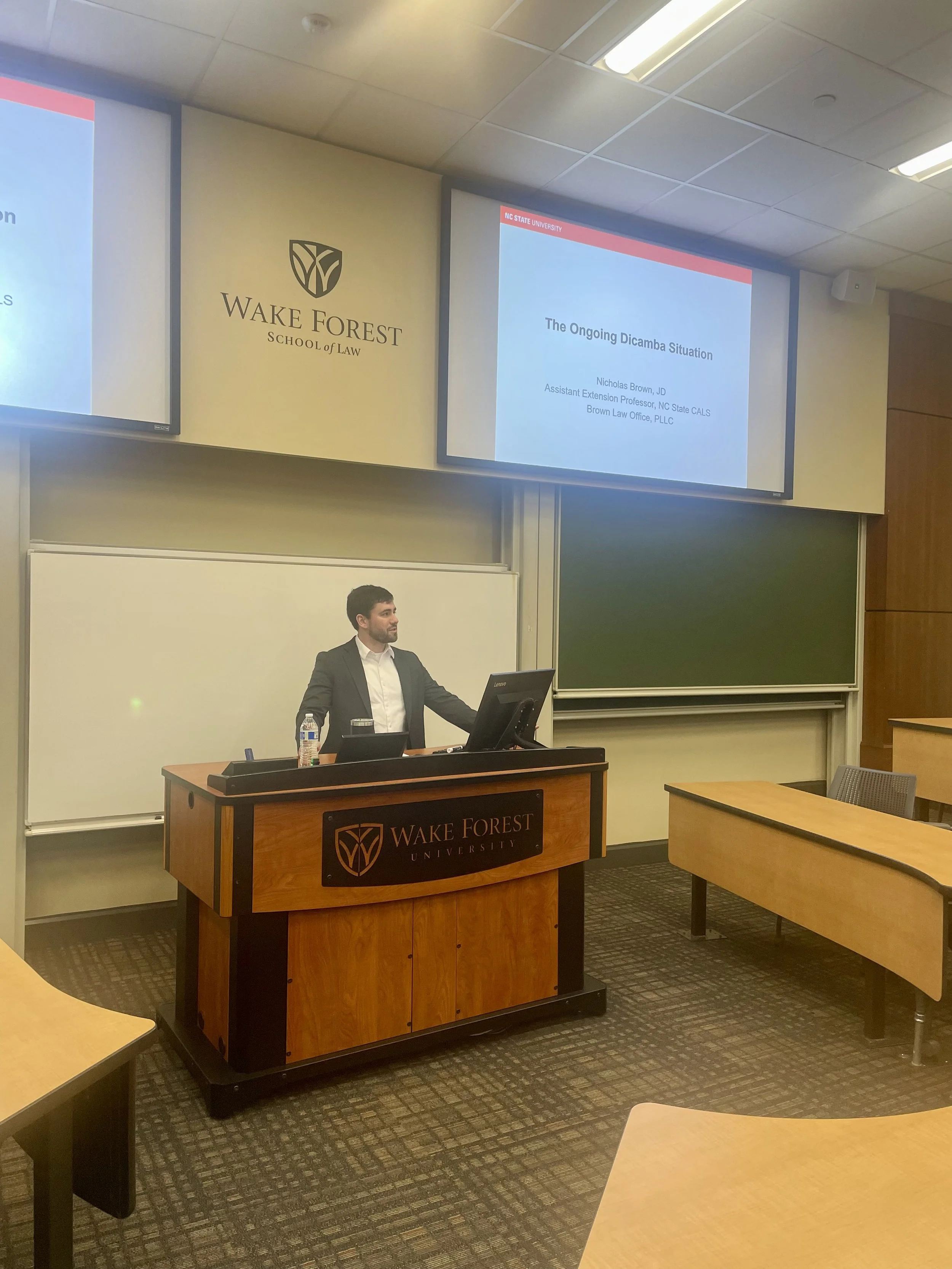
Dicamba Drift Presentation at Wake Forest Law
Where is Over-the-Top Dicamba in 2025?
Latest on Over-the-Top Dicamba Labels for Application
EPA’s Rulemaking Authority on Dicamba, Other Pesticides in Atlanta
Frequently Asked Questions:
Pesticide Drift
Q: What is pesticide drift and should I be worried?
A: Pesticide drift happens when chemicals move off the area where they were applied. It can affect row crops, vineyards, orchards, golf courses, gardens, and other areas you’re trying to protect. Over the past decade, millions of acres have been damaged in individual years by certain herbicides, like dicamba, which highlighted herbicide drift in particular as a major issue. Knowing about drift helps you safeguard your property and take the right steps if you suspect a problem.
There are a few different types of drift to be aware of. Vapor drift happens when pesticides like dicamba evaporate and move as a gas, which can travel fairly far and affect plants downwind. Particle drift involves tiny spray droplets that blow off the target area, usually seen with crop dusters or sprayers, and the damage is generally closer to the source. Overspray occurs when the applicator simply misses the property line entirely, applying chemicals where they shouldn’t be, which is often a sign of negligence.
Q: How do I know if drift has affected my property?
A: Look for unusual damage to plants, such as discoloration, stunted growth, or cupped leaves, which is a very common symptom of dicamba drift. Take plenty of photos and jot down notes about dates, weather, and wind conditions. This documentation can be really helpful if you need to contact the applicator, your insurance, or get professional help. I’ve seen a lot of drift cases, and sometimes small details make a big difference in figuring out what happened.
Q: What should I do if I suspect drift on my property?
A: First, document everything with photos, notes, and any observations about the situation. Then give me a call. I know experts who can get out to your property faster than most, which can be key in determining what type of drift occurred and how to protect your crops or other property. Acting quickly often makes all the difference.
Q: Are there legal or insurance options if drift causes damage?
A: Possibly. Depending on the situation, insurance, applicator responsibility, and local regulations can all come into play. I can help explain your options, guide you on the best steps to take, and connect you with the right people if more specialized legal or insurance help is needed.
Q: How can you help me with pesticide drift issues?
A: I help you understand exactly what happened, walk through your options, and make sure your interests are protected. While I don’t handle on-site testing myself, I can refer you to trusted experts, explain your rights, and guide you through any claims or communications with applicators. Basically, I help you stay one step ahead and protect what’s yours..
Q: Can you handle a pesticide drift case if the litigation is far from your office?
A: A lot of clients worry about this, and it’s a fair question. I almost always partner with local counsel to handle cases that are “far away,” so the litigation gets managed efficiently and according to local rules. Most law firms don’t have much experience with agricultural issues, so I focus on the drift and crop or property-specific concerns, while the local firm handles the courtroom and procedural side. This way, you get the best of both worlds: expertise on the ag side and experienced local litigation support.
Q: I’m a lawyer with a pesticide drift case and need expertise—can you help?
A: Absolutely. I don’t want to take over your case; my goal is to co-counsel with you. I bring specialized knowledge of agricultural issues, crop damage, and drift patterns, while you handle the litigation side. I also have a network of crop scientists and other experts you can tap into, which can be a big benefit for building your case. Most law firms aren’t familiar with the nuances of herbicide drift, so this approach lets us combine our strengths for the best outcome.
Contact me
Interested in working together? Fill out some info and I will be in touch shortly. I can’t wait to hear from you!