Why a Revocable Trust Is Still Better Than a Transfer on Death Deed
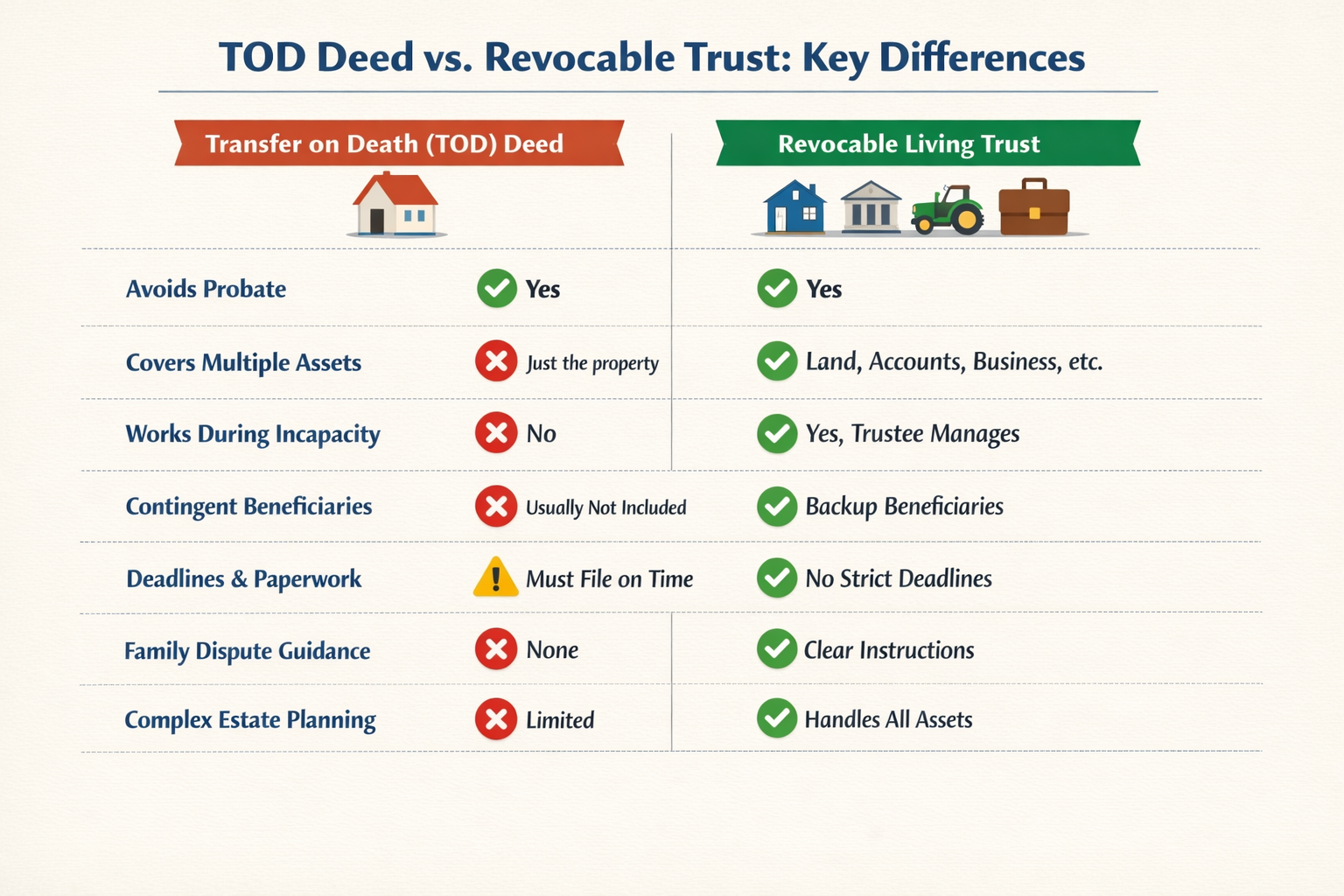
Georgia has taken a meaningful step forward by allowing Transfer on Death deeds. That matters because probate has been a long-standing problem, especially when it comes to land. Farms, timberland, rental property, and inherited acreage often get stuck in probate for months or even years. During that time, families are left waiting while taxes, insurance, and upkeep still have to be managed.
Transfer on Death deeds acknowledge the real issue of property getting tied up in probate. That is a positive development. But while TOD deeds can help in limited situations, a revocable living trust is still the better option for most people who want clarity, flexibility, and fewer problems for their family.
How a Transfer on Death Deed Works
A Transfer on Death deed allows a property owner to name who will receive a specific piece of real estate when they die. While the owner is alive, nothing about ownership changes.
Example: John owns a 40-acre tract of land. He records a Transfer on Death deed naming his daughter as the beneficiary. John continues to own the land outright. He can farm it, lease it, sell it, or revoke the TOD deed if his plans change.
While John is alive, his daughter has no ownership rights in the land. She cannot sell it, mortgage it, or make decisions about it. The deed only becomes effective after John’s death.
After John passes away, his daughter must file paperwork with the county and provide a death certificate before the land can be transferred into her name. Many beneficiaries are not familiar with the filing requirements or deadlines, so they often hire a lawyer to make sure the process is completed correctly. Even with probate avoided, this can mean legal fees, administrative work, and delays.
Once the land is titled in her name, she owns it outright. At that point, she may choose to keep it, lease it, or sell it depending on her circumstances.
This is the basic purpose of a Transfer on Death deed. It is designed to move real estate outside of probate, but it still requires follow-up and decisions by the person who inherits it.
A Transfer on Death Deed Only Solves One Problem
A Transfer on Death deed only applies to the specific property listed in the deed. It does not cover bank accounts, business interests, equipment, or personal property.
Example: Susan owns her home, several acres of land, bank accounts, equipment, and a business. She records a TOD deed for the land. When she dies, the land may avoid probate, but the rest of her assets still require court involvement unless they have been planned for separately.
A revocable trust allows all of these assets to be addressed under one plan instead of relying on multiple tools.
Transfer on Death Deeds Do Not Help With Incapacity
A common planning gap is what happens if someone is alive but unable to manage their affairs.
A Transfer on Death deed does nothing if the owner becomes incapacitated.
Example: Mark owns land and has a TOD deed in place. He suffers a stroke and can no longer sign documents. The TOD deed does not allow anyone else to manage the property. His family may still need a conservatorship or other court involvement to make decisions until he passes away.
A revocable trust allows a successor trustee to step in and manage assets immediately without court involvement.
Transfer on Death Deeds Offer Limited Backup Planning
Life changes. Beneficiaries may pass away, become disabled, or be unprepared to own property.
Most TOD deeds name one person and stop there.
Example:
Linda names her son as the beneficiary of her land using a TOD deed. Her son dies before she does. If the deed is not updated, the land can end up in probate despite her intentions.
A revocable trust automatically addresses these situations by naming backups and providing instructions for how property should be handled.
Why a Revocable Trust Is Still the Better Option
A revocable living trust avoids probate just like a Transfer on Death deed, but it provides more flexibility and protection.
A trust can:
Cover real estate, bank accounts, and business interests
Continue operating during incapacity
Include backup plans if beneficiaries are unavailable
Provide structure for minor or inexperienced heirs
Reduce the risk that property ends up in probate due to missed steps
Example: Instead of relying on TOD deeds, a property owner transfers assets into a revocable trust. The trust owns the property. When the owner dies, no probate case is required, no rushed filings are needed, and clear instructions guide how assets are managed or distributed.
How I Can Help
There is no single right answer for every situation. In some cases, a Transfer on Death deed may make sense. In others, a revocable living trust is the better tool. The right choice depends on your assets, your family, and what you want to happen if circumstances change.
My firm helps individuals, families, and business owners walk through these options in plain language and decide what approach fits their situation. That includes evaluating Transfer on Death deeds, revocable trusts, and how they work alongside wills, powers of attorney, and broader estate planning strategies.
For more free information, you can explore this blog, the rest of my website, and my social media channels, where I regularly explain estate planning topics in a clear and practical way.